
My Hypothesis was COMPLETELY WRONG and I couldn’t be HAPPIER (Liz Strauss)

I’m back, and as promised, we’re taking a deeper dive into the narrative metrics for Michael Crichton’s famed novel: Jurassic Park.
On the whole, Jurassic Park scores pretty well for the narrative metrics. The “and” frequency (AF) is 2.45%, and the narrative index (NI) is 26.
Given these strong scores, I hypothesized that–at the chapter level–the NI would be high in chapters with higher action and intensity and low in more sedate, descriptive chapters of the novel. In short, action should equal high NI. Dialogue & description should equal low NI.
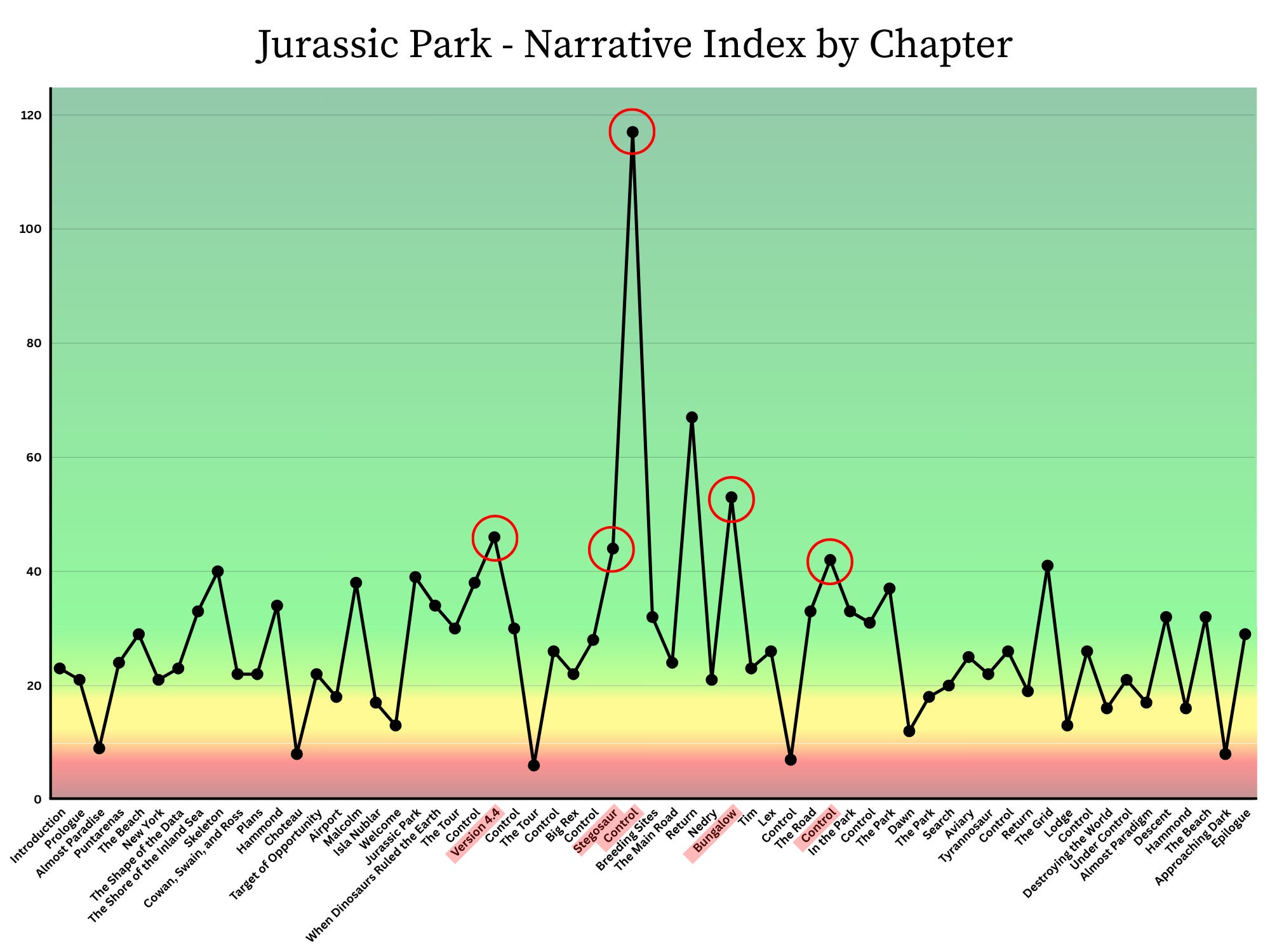
But when I ran the analysis chapter by chapter, it was clear: I was wrong. No one was getting chased by velociraptors or eaten by T-rexes in the high NI chapters. No action-packed chaos or mayhem.
Instead, it was mostly just…talking. Just dialogue and observation.
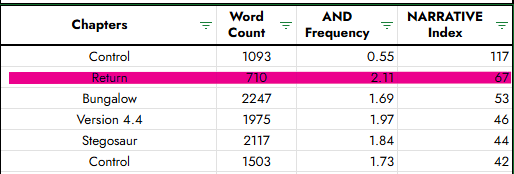
While these chapters don’t have a lot of running, screaming, roaring, or overall dinosaur-filled mayhem; they are critical in building narrative tension. Each one involves debate, investigation, or discovery of vital information that changes the direction of the narrative and heightens the tension.
For example, in the highest scoring chapter, “Control” (scoring an NI of 117), the folks running the Park believe they have total control and know exactly how many dinosaurs are in the Park, but Ian Malcolm proves to them that they are completely wrong.
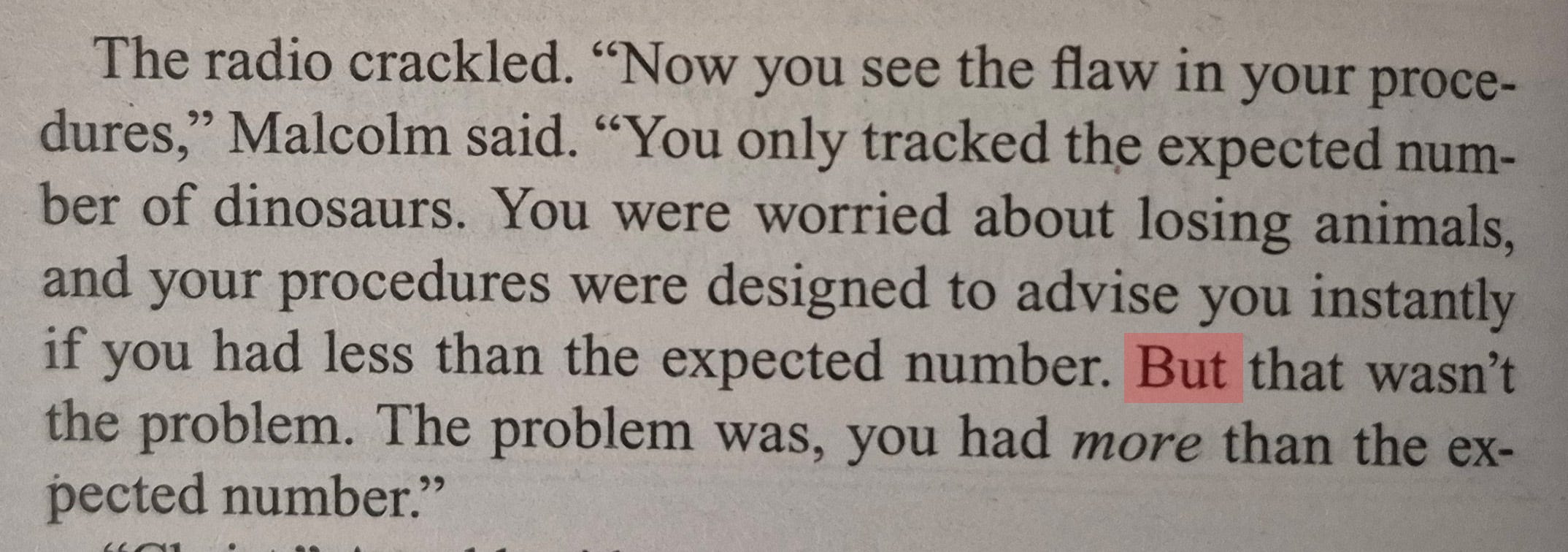
As for the action chapters, yes, there is some initial contradiction (aka problem)—i.e. when the T-rex shows up to eat someone–but most of what follows is the consequence of the contradiction. The T-rex arrives, therefore now Dr. Grant and the kids run away from it.
So where does that leave my initial hypothesis?
Completely blown away! The NI may actually be an indicator of narrative tension and not action. What the action actually indicates is the results–the THEREFORE–of the narrative.
Stay tuned for more revelations from the world of Narrative Metrics!
It's so interesting to hear this kind of analysis, Liz. Looking forward to more.